

Grief is Like That
When I was 23, my father died of brain cancer. He was 55, only two years older than I am now. He was diagnosed in October, and we were told he wouldn’t make it to Christmas. However, on brand with his determined spirit, he lived until the following September.

During that time, my mother took a leave of absence from her job as an OB nurse, and I postponed my post-college plans to move back home and spend time with my dad. Our house was so busy. Friends and family frequented our small home to visit, exchange jokes, laugh, and pray. It was a bittersweet time that I hold tenderly in my heart. Even though I was losing my rock, I had the privilege of having some of the most meaningful interactions of my life with him, friends, and family before he died.
That was thirty years ago, and I am still tearing up as I write about those days.
Grief is like that.
Grief has a mind of its own. Every person experiences grief in their own way and on their own timetable. I processed a lot of my grief while my dad was dying, and then I moved across the country to start a new life with my fiancé. I thought I was done grieving. Then, a few months after I moved, my mom called to tell me that my childhood dog, named Whimpy, had died in his sleep. I completely lost it. I was inconsolable. I cried and took to my bed in a way I never had when my dad died. I felt I had been so "strong" regarding my dad's death, but Whimpy’s death was a whole different sort of grief.
My mother processed her grief differently. She talked to friends and spent a lot of time playing the slot machines in Tunica, Mississippi, where my parents had enjoyed going together. Her grief was so profound that, for a while, I didn't think I would ever get her back. But almost miraculously, about ten years later, she emerged as a different, but just as lovely version of her old self. It was strange, but it was also one of the best gifts she could have given me. She modeled how a person can navigate through the darkness of grief while eventually learning to laugh and see light again.
I am grateful for her example because since my dad died, I have lived a life full of exquisite joys and devastating losses. I have lost pregnancies, jobs, friendships, dreams, abilities, my home, a marriage, my grandparents, my mother, my brother, friends, and the list goes on and on.
The truth many of us don’t even want to whisper is that, if we live long enough, the list goes on and on for most of us.
Most of us are taught and expected to get things. We are taught to get relationships, degrees, jobs, friends, homes, and accomplishments. We celebrate acquisition: graduations, weddings, baby showers, promotions, housewarming parties.
But very few of us are taught how to lose things—especially things and people we love.
Yet loss is an inevitable part of being human.
Grief Doesn't Follow Five Neat Stages
Most of us have heard of the five stages of grief: denial, anger, bargaining, depression, and acceptance.
The stages come from the groundbreaking work of psychiatrist Elisabeth Kübler-Ross, whose 1969 book On Death and Dying helped change the way the medical profession talked about death. Based on interviews and observations of terminally ill patients, Kübler-Ross described five responses associated with confronting one's own mortality: denial, anger, bargaining, depression, and acceptance (Kübler-Ross, 1969).
But there is an important distinction that has largely been lost in popular culture. Kübler-Ross was describing responses she observed among people confronting their own impending deaths. The five stages were not developed as an empirically established, sequential roadmap that every bereaved person should follow after losing someone they love. Over time, however, the five stages became culturally synonymous with grief. Nevertheless, contemporary grief researchers have cautioned strongly against using the stages in this way (Stroebe et al., 2017).
The problem is that grief rarely behaves that neatly. A grieving person might experience anger one morning, acceptance that afternoon, and overwhelming sadness the following Tuesday. Another person may never experience bargaining at all. Someone else may feel relief, and then feel guilty for feeling relieved. A person can laugh at dinner and sob in the car on the way home.

None of those responses necessarily means that someone is "doing grief wrong." There may be no more damaging question for a grieving person than:
"Shouldn't I be further along by now?"
There is no conveyor belt carrying us from denial through anger and bargaining until we eventually graduate to acceptance. Grief is much more human, and much messier, than that (Stroebe et al., 2017).
We Grieve More Than Death
One resource that has influenced the way I think about grief is John W. James and Russell Friedman's The Grief Recovery Handbook (James & Friedman, 2017). One of the ideas I appreciate most about their approach is its broad understanding of loss.
We obviously grieve when someone dies. But we also grieve:
Divorce.
Miscarriage.
Infertility.
Retirement.
A diagnosis.
A friendship that ends.
A child growing up.
A child leaving home.
A career we thought we would have.
A body that no longer does what it once did.
A religious community that no longer feels like home.
A future we imagined that isn't going to happen.
Sometimes we even grieve things we chose. You can know that ending a marriage was necessary and still grieve the marriage. You can be excited that your child is going to college and ache when you walk past the empty bedroom. You can leave an unhealthy church and still miss the community that once surrounded you. You can choose a new life and still grieve the old one.
Grief doesn't require us to wish that things had turned out differently. Sometimes it simply asks us to acknowledge that something mattered, and now it has changed.
Grief Is Cumulative
Another idea from The Grief Recovery Handbook that resonates deeply with me is that grief can be cumulative (James & Friedman, 2017). Looking back, I wonder if that helps explain my seemingly disproportionate response when my childhood dog died.
I had just watched my 55-year-old father die. I had left my family. I had moved across the country. My childhood home was changing. My life as I had known it was disappearing, and then my dog died. Maybe I wasn't only crying for my dog. Maybe I was crying for all of it.
One loss can touch every loss that came before it. An unexpected breakup can awaken feelings from a divorce years earlier. Losing a parent can bring back grief surrounding a grandparent. A child leaving home can stir memories of other endings we thought we had already "dealt with."
This doesn't necessarily mean we failed to grieve correctly the first time. It just means grief has memory.
We Can Unintentionally Say Hurtful Things to Grieving People
Grief can make us uncomfortable, especially when it belongs to someone we love. We want to help. We want to ease their pain. We want to find the words that will somehow make an unbearable situation a little more bearable. But grief is not something we can talk another person out of, and sometimes the words we offer with the best of intentions can leave them feeling even more alone. James and Friedman (2017) identify several common messages about grief that may be intended as comfort but are not always experienced that way, including:
"Be strong."
"Everything happens for a reason."
"At least he isn't suffering anymore."
"She's in a better place."
"You can always have another baby."
"You're still young. You'll find someone else."
"He wouldn't want you to be sad."
"Time heals all wounds."
The intentions behind these statements are usually loving, but grief isn't a problem that another person needs to solve. Sometimes the most compassionate response is much simpler, such as:
"I'm so sorry."
"I miss her too."
"Tell me about him."
"That sounds incredibly painful."
"I'm here."
We don't have to rescue people from grief. Sometimes loving someone means being willing to sit beside them while they are grieving.
You Don't "Get Over" Someone You Love
Perhaps the language I appreciate most in The Grief Recovery Handbook is the idea of completion (James & Friedman, 2017).
I don't like telling people to "get over" a loss. I don't want to get over my father. I don't want to get over my mother. I don’t even want to get over my ex-husband, the father of my children. I don't want the people I have loved to become insignificant enough that their absence no longer matters. Completion means something different.
In the Grief Recovery framework, completion involves attending to what remains emotionally unfinished in our relationship to a loss. It deals with the things we wish had been different, better, or more; the apologies that were never made; the words of love or gratitude that were never spoken; the hopes that can no longer be fulfilled. Completion doesn't mean forgetting. It doesn't mean approving of what happened. It doesn't mean that we stop missing someone, and it certainly doesn't mean that grief will never visit us again.
Thirty years after my father's death, I can write a paragraph about him and suddenly find tears in my eyes. That doesn't mean I haven't healed. It means I loved my dad. The difference is that the grief no longer occupies the same place in my life that it did when I was 23. I have learned how to carry it. And knowing that I can carry that loss gives me hope that I can carry my more recent losses.
Maybe Grief Isn't Something We Finish
Perhaps that is one of the paradoxes of grief.
We can complete unfinished emotional business surrounding a loss without finishing our relationship with the person, or the life, that we lost. We carry pieces of them forward. My father's humor still lives in my family. My mother's capacity to find laughter again after profound loss became something she taught me simply by living it. And I see my ex-husband’s sparkling eyes and sharp wit reflected in our brilliant children.
People we love continue shaping us long after they are gone. And the same can be true of other losses. A marriage can end and still have mattered. A dream can die and still have shaped who we became. A season of life can close without becoming meaningless. Maybe healthy grieving isn't about returning to the person we were before the loss. Maybe grief asks something different of us:
Can we make room for what has been lost while continuing to make room for what is still possible?
I think my mother eventually did that. I think I have been learning to do it too.

If you are grieving something right now, whether it is a person, a relationship, a dream, a version of yourself, or something you can't quite explain, I hope you will give yourself permission to grieve it without measuring your progress against someone else's timetable. You do not have to grieve in five stages. You do not have to be strong. You do not have to pretend that something didn't matter simply because other people don't understand why it mattered so much. And you do not have to "get over it."
You can remember. You can grieve. You can laugh again.
You can build a meaningful life around the places that still ache.
Grief is like that.
References
James, J. W., & Friedman, R. (2017). The grief recovery handbook: The action program for moving beyond death, divorce, and other losses including health, career, and faith (20th anniversary expanded ed.). William Morrow.
Kübler-Ross, E. (1969). On death and dying. Macmillan.
Stroebe, M., Schut, H., & Boerner, K. (2017). Cautioning health-care professionals: Bereaved persons are misguided through the stages of grief. OMEGA—Journal of Death and Dying, 74(4), 455–473. https://doi.org/10.1177/0030222817691870
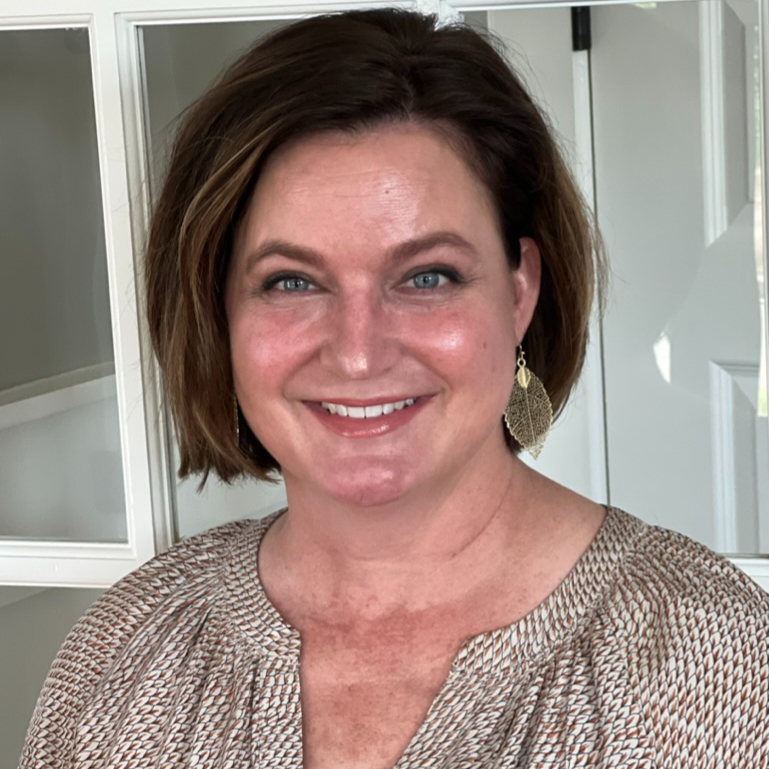
Kimberly Dillard (M.Ed., M.Div.) is an integrative, trauma-informed counselor who supports individuals and couples through anxiety, depression, trauma, and life transitions. Blending psychology and spirituality, she utilizes evidence-based practices like EMDR, IFS, and Imago Relationship Therapy. Kimberly provides a compassionate space to help clients turn life's challenges into opportunities for healing, authenticity, and hope.


Comments